

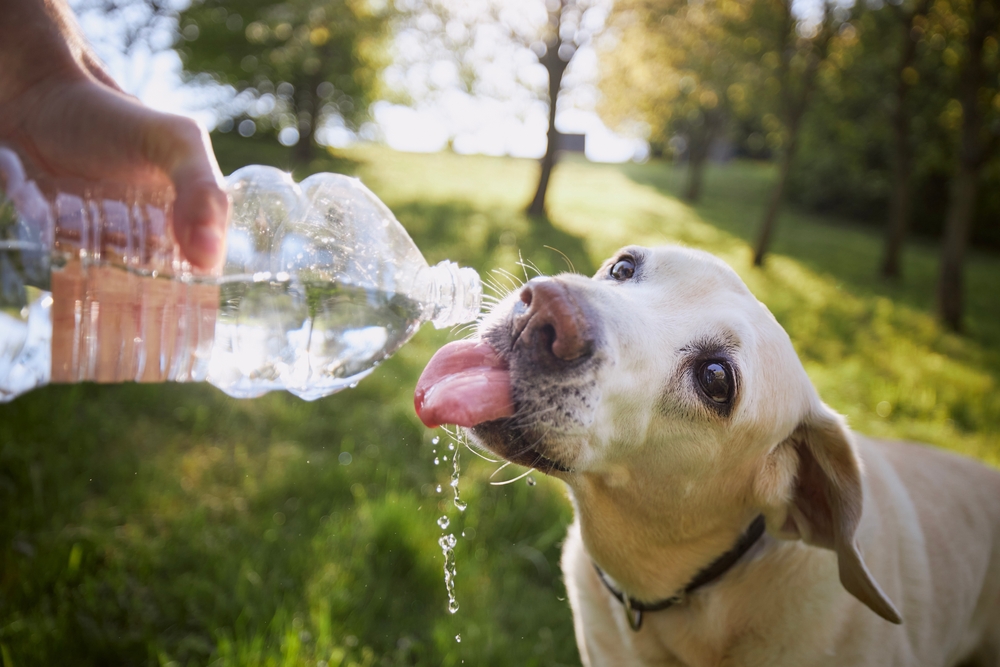
Recognizing heat stroke early comes down to knowing the first quiet signals — heavy panting that will not settle, a dog seeking shade or cool floors, and a sudden drop in energy — and acting on them before they escalate to collapse or seizures. The hardest part in the Hudson Valley is timing: heat stroke does its most dangerous work on the first warm days of the year, when neither dogs nor their families are thinking about it yet. A dog who sailed through last summer has lost that conditioning over the winter, so an early-season warm spell can catch them unprepared.
LaGrange Veterinary Hospital cares for pets through a Northeast climate where the heat arrives suddenly rather than gradually, and that abruptness is exactly what makes it risky. Our veterinary services include the diagnostics to assess an overheated pet quickly. If your dog or cat has been in the heat and something seems off, contact us and we will help you decide what to do.
Early-Season Heat: The Essentials
- The first hot days of the year are the most dangerous, because pets lose their heat conditioning over the cool months and may still have their thicker winter coats.
- Cool (never iced) water plus airflow is the safe way to cool; ice traps heat in the core.
- The earliest signs are easy to miss when no one is expecting heat to be a problem yet.
- A pet who recovers after overheating can still develop kidney, liver, or clotting trouble over the next 24 to 72 hours.
Why Are the First Hot Days of the Year the Most Dangerous?
Heat tolerance is something an animal builds gradually, and it fades when it is not used. Over a Hudson Valley winter and a cool spring, a dog’s body loses much of the adaptation it built the previous summer, so the first stretch of genuinely warm weather lands on a pet who is not ready for it. Our cold winters mean they’ve likely built up a thicker coat which may not have fully fallen out by the time we hit our first truly hot day. The temperature does not even have to be extreme; a sudden 80-degree day in May can be more dangerous than a 90-degree day in August, because the August dog has had weeks to adjust.
| When the heat comes | The dog’s heat tolerance | The risk |
| First warm days of spring | Low, after a cool winter | Highest; pets are unprepared |
| A week or two of warm weather | Beginning to build | Still cautious, adapting |
| Settled into summer | Better adapted | Lower, but heat waves still dangerous |
| A sudden spike any time | Lags behind the weather | Climbs again until they adjust |
The practical lesson in preventing heat stroke is to treat the season’s first warm days, and any abrupt jump in temperature, with the caution you would give a heat wave, even if the number on the thermometer looks modest. Re-acclimatization is not instant either; a dog’s body needs roughly two weeks of gradual exposure to rebuild the cardiovascular and panting efficiency that sheds heat, which is why one hot spring weekend is no substitute for easing in over time.
Humidity matters as much as temperature, and it is the variable most often left out of the equation. Dogs cool themselves primarily by panting, which sheds heat by evaporating moisture from the mouth and airways. When the air is already saturated with moisture, that evaporation slows or stops, and the cooling system that handles 85-degree dry air can fail at 78 degrees with high humidity. Hudson Valley summers tend to bring exactly that combination, and the muggy days after a thunderstorm rolls through can be more dangerous than the bright dry days that feel hotter to people. A useful rule of thumb: if the air feels heavy to you, treat it as a higher-risk day for your dog regardless of what the thermometer reads.
What Are the Early Signs Most People Miss?
The signs that matter most are the subtle ones, because by the time a dog is in obvious distress the emergency is already underway. Early, heat stroke in pets shows up as panting that stays heavy even at rest, a dog repeatedly lying on cool tile, lagging on a walk, or simply seeming off. These are the moments to stop and cool, and they are easy to wave away on a pleasant spring afternoon.
A few additional early signals worth knowing, since they often slip past families who are looking for something more obvious. Look for a dog whose tongue widens and curls at the edges, hangs further out than usual, or develops a deep red color; for thick, ropy saliva replacing normal thin drool; for restlessness or pacing in a dog who is usually settled; and for any reluctance to keep moving on a walk that they were enjoying minutes earlier. Each of these comes well before collapse, and each is a reason to get into shade, offer water, and reassess before continuing.
If the early window passes, the picture sharpens: thick drool, reddened gums, weakness or stumbling, and vomiting. At the severe end come pale, gray, or purple gums, collapse, disorientation, and seizures, which is a full emergency. Cats keep things quiet, so a cat panting with an open mouth, lying flat, or hiding somewhere cool needs help right away, because open-mouth breathing in a cat is never normal.
What Should You Do if Your Dog Overheats?
If you catch it, a calm, correct response makes all the difference, so follow these steps for cooling:
- Move to shade or air conditioning and out of the sun.
- Wet the neck, belly, groin, and paws with cool tap water, not ice.
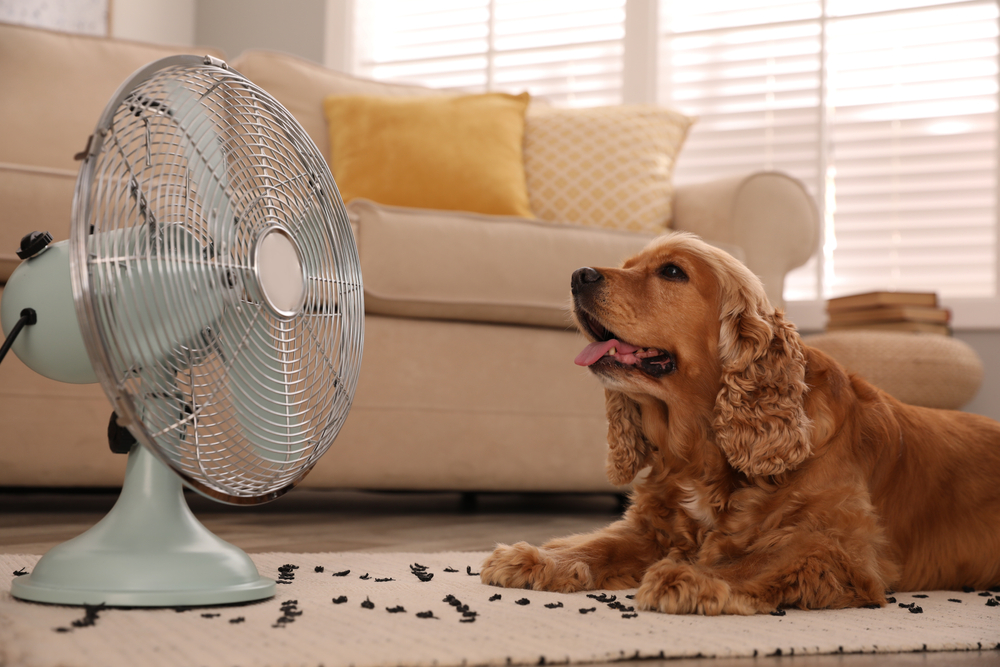
- Add airflow from a fan or breeze to drive evaporation.
- Offer small sips to an alert pet, never forcing water.
- Skip the ice, which constricts surface blood vessels and traps heat.
- Skip wet towels, which can trap heat if draped over your pet.
- Call us and drive in, cooling on the way and stopping near 103 degrees.
Home cooling is meant to start the process and make transport safer, not to finish the job, which happens with us.
Why Does a Pet Still Need the Vet After Cooling?
Because heat stroke’s most serious effects are internal and delayed. Heat stroke treatment layers controlled cooling, IV fluids to support circulation and the organs, and close watch for the complications that follow, with the first 24 hours the riskiest.
The delayed complications are the reason a check is worth it: the kidneys can decline over a couple of days, the liver can show strain on bloodwork, the gut lining can break down into bloody vomiting or diarrhea, the clotting system can spiral into DIC where the body clots and bleeds at once, and the brain can swell, with neurologic signs surfacing after an apparent recovery. Same-day bloodwork catches these while they are still treatable.
Why Do Some Dogs Overheat Faster Than Others?
Beyond acclimatization, an individual dog’s build matters a great deal. Flat-faced breeds, whose airway anatomy limits panting and whose risk climbs with extra weight, have the least margin of all. Heavy-coated northern breeds hold heat against the body, puppies and seniors regulate temperature poorly, and any dog with heart, airway, or endocrine disease tolerates heat less well. For these dogs especially, the early-season caution should start at the very first warm day and stay in place.
Overweight pets deserve special mention here, since excess body weight is a heat risk that families do not usually frame as one. Fat tissue insulates against heat loss the same way it insulates against cold, and it crowds the chest cavity, reducing how deeply a pet can breathe and how effectively they can pant. In a flat-faced dog who is also carrying extra weight, the airway limitation and the insulation compound each other in a way that turns a mild summer day into a serious risk. Weight management is not usually framed as heat safety, but in a region with sudden warm spells it absolutely qualifies, and the same conversations we have at wellness visits about body condition feed directly into how a dog handles the first warm weekend of the year.
How Do You Keep a Hudson Valley Pet Safe in the Heat?
The goal is to stay ahead of the season rather than react to it. A few heat safety habits do most of the work:
- Ease your dog back into warm-weather activity gradually as spring turns to summer
- Walk at the cool ends of the day
- Keep water in several spots
- Give pets cool tile or a mat on warm days
- Feel the pavement for heat before a walk and cut things short when your dog lags
- Never leave a pet in a parked car, where the interior turns deadly within minutes, and hot vehicles claim pets every summer even with the windows cracked
The whole household needs the plan. For outdoor cat safety, keep shaded water refreshed twice daily and offer cool retreats, and treat open-mouth breathing in a cat as an emergency. Indoors, keep air moving and head off restlessness with boredom busters and DIY enrichment toys that keep a pet busy without raising their body temperature.
Frequently Asked Questions About Heat Stroke
What Temperature Is Too Hot to Walk My Dog?
It depends on the dog and how acclimatized they are. Early in the season, treat even the 70s with respect, because a dog fresh off winter has little tolerance built up. By midsummer most dogs handle warmth better, but flat-faced, senior, and overweight pets should still avoid walks above the upper 70s to low 80s, and the seven-second pavement test is always a good check.
My Pet Was Hot but Seems Fine Now. Do I Still Need to Come In?
If your pet was genuinely overheated, a check is the safe call even when they seem recovered. Heat stroke’s organ and clotting damage can take a day or two to surface, and a normal-looking pet may still be affected. A same-day exam and bloodwork answer the question and catch trouble while it is easy to treat.
Are Some Breeds Always at Higher Heat Risk?
Several are. Flat-faced breeds, heavy-coated dogs, seniors, overweight pets, and those with heart or airway disease carry a higher baseline risk every warm day. If your pet falls into one of those groups, start the early-season caution at the first warm day rather than waiting for a true heat wave.
Does My Dog Really Need to Re-Acclimate Every Spring?
In a Northeast climate, essentially yes. Heat tolerance is not permanent; it builds with exposure and fades over a cool winter, so each spring your dog starts with less than they had in August. Easing back into warm-weather activity over a couple of weeks, rather than going all-out on the first nice day, gives their body time to readjust and lowers the early-season risk.
What Should I Do When a Sudden Spring Heat Wave Hits?
Treat it as the real danger it is, even though it feels early in the year. A sharp jump from cool weather to a hot day gives your dog no time to adjust, so scale activity back right away with short, early walks, water always within reach, and indoor time through the warmest hours. Keep the season’s first heat waves low-key and let your dog ease into the warmth over the following days, rather than picking up where last summer left off.
A Safe Hudson Valley Summer for Your Pet
In a climate where heat arrives in sudden bursts, the safest summer routines respect the first warm days as much as the dog days of August, ease back into activity, and watch for the early signs. Cool the right way if your pet overheats, and come in even when they seem to bounce back.
If you want a plan for easing your pet into the warm season, or your dog or cat has overheated, request an appointment or get in touch with our team and we will help.