


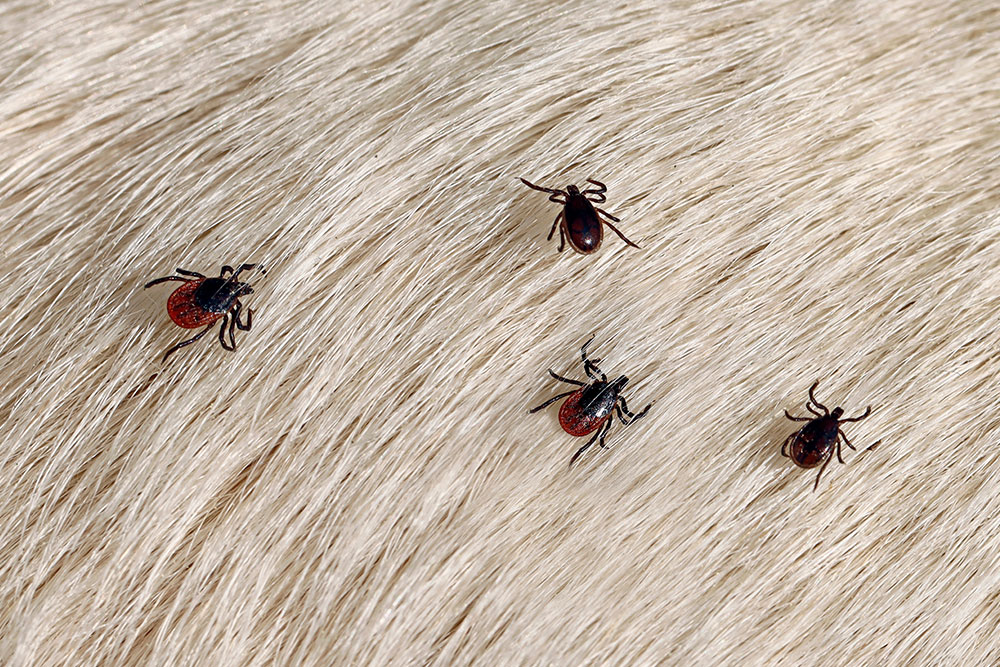
Tick disease testing comes before treatment for IMHA or ITP because the medications that stop an immune attack on red cells and platelets also lower your pet’s defenses, and that is a risky trade if an infection set the whole thing off in the first place. In immune-mediated hemolytic anemia (IMHA), the target is red blood cells. In immune-mediated thrombocytopenia (ITP), it is the platelets that let blood clot. A complete blood count, a smear read under the microscope, and testing for tick-borne infection tell us whether the immune system is misfiring on its own or reacting to something underneath it. That difference decides the plan, because suppressing the immune response while a hidden infection goes untreated is how these cases relapse.
Ticks are part of life in the Hudson Valley, and the infections they carry are high on our list of suspects when your pet’s red cell or platelet counts drop. LaGrange Veterinary Hospital in Lagrangeville starts with a thorough head to toe exam, then turns to our in-house laboratory and digital x-rays to look for anything driving those counts down. If your pet has pale gums, sudden weakness, or bleeding you cannot explain, call us right away, or go straight to the nearest 24-hour emergency hospital if we are closed.
The Quick Version on Auto-Immune Blood Diseases
- IMHA is the immune system destroying red blood cells, and ITP is that same mistake aimed at platelets, so one shows up as anemia and the other as bleeding.
- Pale or yellow gums, sudden weakness, fast breathing at rest, pinpoint bruises, or dark urine all mean your pet needs an exam today.
- Tick-borne infections can trigger these diseases or imitate them closely, so testing for them comes before we start suppressing the immune system.
- Most pets diagnosed early and started on treatment quickly do recover, and year-round tick prevention lowers the odds of ending up here at all.
Which Symptoms Mean My Pet Needs to Be Seen Today?
Any sign that your pet is running short on red blood cells or short on platelets is a same-day problem, not a Monday problem. That covers changes in gum color, energy, breathing, and urine color, plus bleeding or bruising that no injury explains. These diseases move quickly, and the first day of treatment counts for a lot.
- Gum color: A quick lip-lift tells you a lot: pale or jaundiced gums, whether chalky white or tinged yellow, mean red blood cells are disappearing faster than the body can replace them.
- Breathing: Breathing that speeds up while your pet is resting, a cat breathing with their mouth open, or a rhythm that suddenly changes all count as labored breathing, and that is a same-day call, not a wait-and-see night.
- Energy: A dog who won’t get up for dinner, or a cat who’s gone quiet in the back of a closet, has lost the oxygen supply that ordinary activity needs. Collapse sits at the far end of that same slide.
- Bleeding and bruising: Pinpoint red dots on the belly or gums, bruises with no bump behind them, a nosebleed out of nowhere, blood in urine or stool, or a small cut that keeps oozing all point at platelets.
- Urine color: Urine the color of strong tea, along with a yellow cast to the gums or the whites of the eyes, means pigment from destroyed red cells is spilling into circulation.
Earlier on, it’s quieter than that. The walk gets shorter, the bowl stays half full, and a dog who used to bound up the stairs takes them one at a time. Some breeds carry a documented predisposition to IMHA, Cocker Spaniels most of all, along with English Springer Spaniels, Poodles, Old English Sheepdogs, and Irish Setters.
Two things to skip while you’re getting ready to come in. Never give human pain medication such as aspirin or ibuprofen, because both interfere with platelets and can turn a bleeding problem into a crisis. And leave over-the-counter iron supplements alone, since this type of anemia has nothing to do with low iron. Call ahead when you can, so we know a possible bleeding or anemia case is on the way.
What’s the Difference Between IMHA and ITP?
The difference is which cell the immune system goes after. In immune-mediated hemolytic anemia, red cells are cleared from circulation quicker than the marrow can rebuild the supply, and every organ starts running short on oxygen. ITP leaves oxygen delivery alone and takes out the clotting cells instead, so the trouble surfaces as bleeding.
Platelets seal small breaks in blood vessels before bleeding ever becomes visible, and in immune-mediated thrombocytopenia they are destroyed faster than the marrow can release new ones. Much of that loss happens where nobody can see it, into the intestines, the abdomen, or the brain, which is why a dog with only a few purple spots on the belly can still be in serious trouble. This condition is far less common in cats than dogs, and a cat who has it gets a hard look for an infection or a tumor underneath.
| Feature | IMHA | ITP | Evans syndrome |
| What’s attacked | Red blood cells | Platelets | Both at the same time |
| What you notice | Pale or yellow gums, weakness, fast breathing, dark urine | Pinpoint bruises, nosebleeds, blood in urine or stool | Signs of both, often severe |
| Biggest danger | Abnormal clotting and oxygen starvation | Bleeding into the gut, abdomen, or brain | Rapid swings in both counts |
| What treatment adds | Anti-clotting medication, transfusion if severe | Medication to push platelets out of the marrow | Both plans at once, adjusted constantly |
Why Is Clotting the Bigger Danger in IMHA?
It sounds backwards, but pets with IMHA tend to throw clots rather than bleed. The blood clotting complications that develop while red cells are being destroyed are one of the leading causes of death in IMHA.
Wreckage from ruptured cells, plus the inflammation riding along with the attack, makes blood far more likely to solidify where it shouldn’t. The lungs are the usual site, and a major vessel feeding the back legs is another.
- Sudden difficulty breathing, or a cough that arrives out of nowhere
- A back leg that turns cold, painful, or useless, most often in cats
- Collapse, disorientation, or an abrupt change in behavior
If any of those show up, call us right away and start moving. A clot is not something to sleep on.
What If Both Red Cells and Platelets Are Hit at Once?
Concurrent immune-mediated conditions mean the red cells and the platelets are under attack at the same time, so treatment has to defend both lines at once and gets adjusted almost daily. This combination is known as Evans syndrome, and it needs far closer supervision than either problem alone.
Why Would My Pet’s Immune System Attack Their Own Blood Cells?
Immune-mediated diseases begin when the immune system misreads the body’s own cells as invaders and destroys them, and when the target is blood cells, the damage shows up fast. Sometimes that misfire happens with no outside push at all.
A primary case has no identifiable trigger, so the work is aimed squarely at calming the immune response with medication. A secondary case has something underneath driving it, and that has to be found and treated at the same time. Suppress the defenses while an infection keeps running, and the numbers crash again the moment doses taper. So what flips the switch?
- Tick-borne infections: Anaplasma, Ehrlichia, Babesia, Lyme disease, and Rocky Mountain spotted fever all sit near the top of the suspect list in this part of New York.
- Other infections: Leptospirosis, picked up from standing water and wildlife urine, is a real risk in the Hudson Valley. In cats, hemotropic mycoplasma latches onto the surface of red blood cells, and the immune response that follows often destroys healthy cells right alongside the infected ones. Feline leukemia virus works from a different angle toward the same end, and canine distemper can knock platelets down in unvaccinated dogs. Heartworm disease also belongs on the list of infections that can set off secondary platelet destruction.
- Cancer: Lymphoma and hemangiosarcoma are the two most common drivers in dogs, and a tumor sitting in the spleen can pull platelets out of circulation on its own.
- Toxins and medications: Zinc toxicosis, usually from a swallowed coin or a piece of hardware, destroys red cells directly, as do onions and garlic. A handful of medications and snake bites can provoke the same reaction.
- Recent vaccination: A small number of ITP cases have been reported in the weeks following vaccination. The link is uncommon, and the diseases those vaccines prevent are far more dangerous than the risk.
Why Do Tick Bites Set Off IMHA or ITP?
A tick bite can set both conditions in motion, and it can also produce a picture that looks identical to a primary case. Ehrlichia and anaplasma both drive platelet counts down on their own, which means a dog can look exactly like a primary ITP case while an untreated infection is doing the damage.
Lyme disease is the one most families around here know by name, though its effect on blood counts tends to be indirect. Rocky Mountain spotted fever hits platelets hard and can cause visible bleeding alongside fever and swelling. Babesia destroys red blood cells outright and turns up more often in Pit Bulls and Greyhounds. It also passes dog to dog through bite wounds, so a dog with a fighting history gets tested even when no tick was ever found.
Tick-borne disease screening is a standard part of the workup here whenever red cell or platelet counts fall, not a test we circle back to later.
How Do We Find Out What’s Destroying My Pet’s Blood Cells?
The workup opens with a full history and a hands-on exam, then moves straight to blood. A complete blood count with a smear read under the microscope shows whether red cells or platelets are falling and whether the marrow is fighting back. Everything after that is aimed at answering why.
| Test | What it tells us |
| CBC with blood smear | Whether red cells or platelets are dropping, and what those cells look like under magnification |
| Reticulocyte count | Whether the bone marrow is producing replacement red cells |
| Coombs test | Whether antibodies are coating red blood cells; this one travels to a reference laboratory |
| Chemistry panel and urinalysis | Organ function, bilirubin levels, and whether pigment from ruptured cells is spilling into urine |
| Tick-borne disease testing | Whether an infection is driving the counts down |
| X-rays | Spleen and liver size, masses, swallowed metal objects, and changes in the chest |
Because the blood work runs in our in-house laboratory, we’re usually reading numbers before you’ve left the building, so treatment can start at the same visit instead of waiting on a courier.
How Are IMHA and ITP Treated in Dogs and Cats?
Treatment has two jobs: medication that dials the immune system down, and support for the body while counts climb back. When a trigger turns up, clearing that infection or addressing that tumor is part of the plan.
No two of these patients follow the same schedule. Our veterinarians recheck counts frequently and adjust doses based on what the numbers do, since a plan that fits week one often needs rewriting by week three.
What Does Treating IMHA Involve?
IMHA care combines immune suppression with whatever support the body needs to survive the wait. Steroids start the work, a second drug frequently joins them, and a severely anemic patient may need a transfusion to hold on while medication takes effect.
- Immunosuppression: Prednisone is the usual starting point, often paired with cyclosporine, mycophenolate, or azathioprine so steroid doses can come down sooner.
- Clot prevention: Higher-risk patients get a prescription anti-clotting drug, sometimes a specific low dose of aspirin chosen by a veterinarian, which is nothing like a tablet from the medicine cabinet at home.
- Supportive care: Fluids, anti-nausea medication, appetite support, and genuine rest carry much of the load while the marrow catches up.
- Transfusion: Blood transfusions do not stop the immune attack. They buy time, putting oxygen-carrying red cells back into circulation while the medication starts to work. These happen at a hospital equipped for them, and we arrange that transfer quickly when counts fall that far.
- Plasma exchange: Therapeutic plasma exchange filters destructive antibodies out of the bloodstream and is offered at referral centers for severe cases that aren’t responding.
- Treating the trigger: Doxycycline covers the tick-borne infections, and it’s frequently started while test results are still pending.
What Does Treating ITP Involve?
ITP care leans on corticosteroids first, with more added when platelet counts stay dangerously low. The aim is to halt the destruction long enough for the marrow to restock, and most dogs turn a corner somewhere between a few days and a couple of weeks.
Vincristine, a drug borrowed from cancer protocols, nudges the marrow into releasing platelets faster and often shortens a hospital stay. Intravenous immunoglobulin can slow destruction in critically low patients while steroids get a foothold. For the small number of dogs whose numbers never hold, splenectomy removes the organ doing most of the filtering of antibody-coated platelets. That’s a late decision, and most pets never come close to needing it.
Does Year-Round Tick Prevention Lower the Risk?
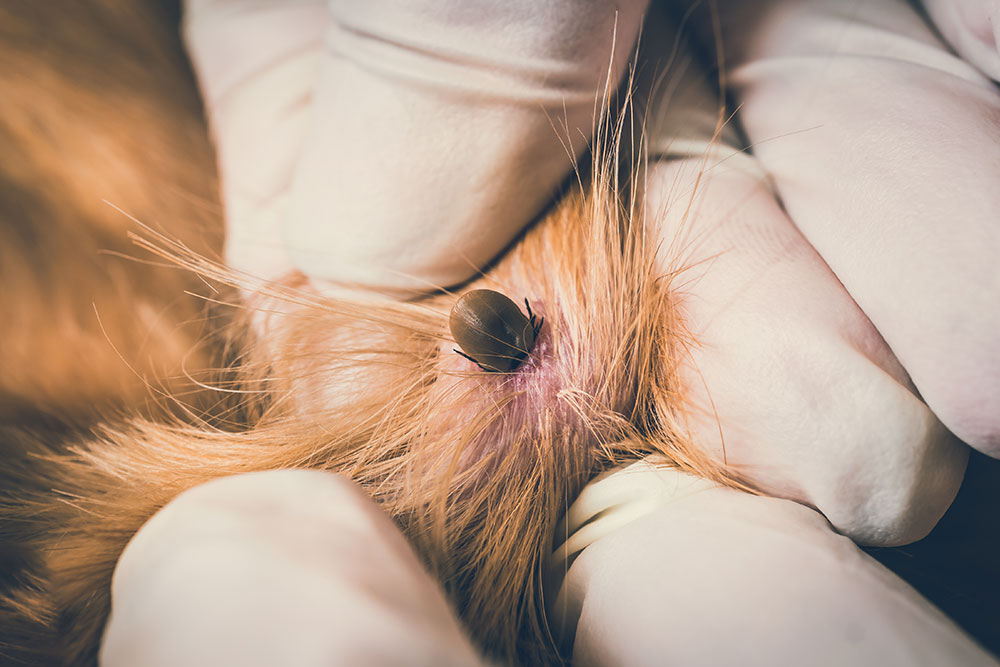
Year-round tick prevention is the most direct way to lower the risk of a secondary blood disorder, and a single skipped month opens a window a tick will find. Ticks here stay active any time the ground isn’t frozen, and one mild week in January is plenty.
Prescription products are considerably more dependable than what’s on the shelf at the hardware store. Cats need a formulation made for cats, because several canine products are toxic to them. Running your hands over your pet after time outside catches the ones still crawling, and prompt removal with fine tweezers beats every home remedy you’ll come across.
Set up a prevention visit and we’ll match a product to your pet’s weight, habits, and the other animals sharing the house.
Frequently Asked Questions About IMHA and ITP in Pets
How long will my dog or cat be on medication?
Most pets stay on immunosuppressive medication for several months at minimum, and the taper is slow by design. Counts have to hold steady at each lower dose before the next reduction, which means rechecks close together early and spreading further apart as things settle. Some pets come off medication entirely, while others do better on a small maintenance dose long term. Rushing the taper is one of the most common reasons a case relapses.
Can IMHA or ITP come back after my pet recovers?
Relapse is possible, and it’s most likely during the first year, particularly when doses drop too fast or an underlying trigger was never identified. That’s the whole reason we test for tick-borne infection and look for cancer before starting treatment. Watch for the same changes that brought you in originally: pale gums, flattened energy, new bruising, or dark urine. If any of them return, we recheck the numbers instead of waiting to see what happens.
Can my other pets catch this?
The immune disease itself isn’t contagious. One dog’s immune system attacking their own red cells poses no danger to the dog napping beside them. Some of the infections that trigger these conditions are another matter. Babesia can pass between dogs through bite wounds, and any animal sharing a yard has shared the same tick exposure. When one pet is diagnosed with a tick-borne infection, testing the others in the household is usually the right move.
What’s the Next Step If You’re Worried About Your Pet’s Blood Counts?
A diagnosis like this is frightening, and the fear tends to arrive well before the answers do. The reassuring part is that fast, accurate diagnosis gives most pets a real chance at recovery, and what makes that possible is almost always a family who noticed something was off and acted on it. If your pet’s gums look wrong, if the energy has drained away, or if bruises are appearing with no explanation, book a visit at LaGrange Veterinary Hospital in Lagrangeville and we’ll start looking. We’ll keep your pet comfortable while we work and talk through what each number means as it comes in. If we’re closed and your pet is in crisis, go straight to the nearest 24-hour emergency hospital.


Leave A Comment