



Allergic reactions in pets run on a spectrum, from itchy skin and hives that look dramatic but stay mild, to anaphylaxis, which can shut down breathing and circulation within minutes. The middle of that range is where most pets land after a bee sting, a new food, or a vaccine reaction, and a dose of medication plus a few hours of monitoring is often all they need. The top of the spectrum is different. Facial swelling that closes the airway, vomiting paired with collapse, pale gums, or sudden weakness means the reaction has gone systemic and your pet needs to be seen now, not in the morning.
LaGrange Veterinary Hospital takes a thorough, head-to-tail approach to pets that come in mid-reaction, because what looks like simple hives can be hiding low blood pressure or early trouble in the throat that only a real exam catches. We offer exams and in-hospital diagnostics for dogs and cats in Lagrangeville, and we have medications on hand to begin supporting an allergic pet during our regular hours. If your pet has swelling around the face, is breaking out in hives, or seems off after a sting, vaccine, or new food, please reach out to our team so we can decide together how fast they need to be seen.
The Short Version Worth Remembering
- Allergic reactions live on a spectrum, from chronic itchy skin that needs steady management to anaphylaxis that can turn life-threatening in minutes.
- Hives and significant facial swelling earn a same-day look, because they can be the opening act of a more serious reaction rather than the whole show.
- Dogs and cats crash differently in anaphylaxis: dogs tend to vomit and collapse, while cats hit a respiratory crisis, and open-mouth breathing in a cat is always an emergency.
- Long-term relief comes from finding and treating the underlying allergy, not just chasing each flare with another round of medication.
Which Allergens Set a Dog or Cat Off in the First Place?
Most allergic reactions in dogs and cats trace back to three families of triggers: what floats through the air, what goes in the food bowl, and what bites or stings. Sorting out which one is at work shapes everything that comes next, from the workup to the long-term plan.
Pollen, grass, mold, and dust mites are the everyday environmental allergens behind atopic dermatitis, the itchy, chronic skin disease that flares with the seasons. Food allergies work differently, usually stemming from a specific protein and causing symptoms that stick around all year long. Then there are the biters and stingers. A pet with flea bite sensitivity can react to a single bite, which is why the itchiest patient in the house is sometimes the one you never see fleas on. Bee and wasp stings, along with other insect encounters, round out this third category, and they are the ones most likely to escalate quickly.
Could a Shot or a Prescription Be Behind My Pet’s Reaction?
A shot or a new prescription can occasionally set off an allergic response, though this is uncommon and rarely serious. The vast majority of pets are vaccinated without incident, but knowing which post-shot signs are normal and which point to true vaccine reactions tells you when a little soreness is fine and when it is time to pick up the phone.
A normal response looks like mild tiredness, a little tenderness at the injection site, or a low-grade fever for a day. What warrants a call is facial swelling, hives, vomiting, or trouble breathing in the hours after a shot. Medications can trigger the same kind of hypersensitivity, whether it is an antibiotic, a topical, or something new to your pet. The single most useful thing you can do is tell us about any prior reaction before the next vaccine or prescription. We review that history at every wellness and preventive care visit, and a note in the chart lets us pre-treat or adjust the plan so the same thing does not happen twice.
Routine, Same-Day, or Rush In: Reading Your Pet’s Reaction
Allergic reactions sort into three urgency tiers, and reading the level correctly is what tells you whether to book a routine appointment, come in today, or head straight for emergency care. The signs you are watching for are the deciding factor, not the trigger itself.
| Urgency tier | What it looks like | What to do |
| Chronic, monitor | Ongoing itchy skin, recurring ear trouble, licking and scratching that comes and goes | Schedule a workup; not an emergency |
| Same-day care | Hives, significant facial or muzzle swelling, one localized sting reaction | Be seen today, before it can escalate |
| Emergency, now | Collapse, repeated vomiting, pale or blue gums, labored or open-mouth breathing | Immediate care; do not wait |
The full range of allergic reactions in dogs and cats spans all three tiers, and a pet can climb from one to the next faster than you would expect. While you are getting to us, a few things help. Stay calm, because your pet reads your energy. Note the timing and the likely trigger, and bring the suspected culprit if you safely can. Do not induce vomiting or reach for human medications without guidance, since the dose and the drug both matter. On the way in, watch your pet’s breathing and check for pale or bluish gums, which warn that circulation or oxygen delivery is faltering. If any of those emergency signs show up, call us right away so we know you are coming, or head to the nearest veterinary ER if we are closed.
The Point Where a Reaction Turns Life-Threatening
Anaphylaxis is a true medical emergency, the body’s allergic response gone systemic all at once, and it demands immediate care. It presents differently depending on the species, which is the single most important thing for a family to understand.
Anaphylaxis in dogs tends to hit the gut first, with sudden vomiting, diarrhea, weakness, collapse, and pale gums that can be mistaken for a severe stomach bug. That gastrointestinal-dominant picture fools a lot of families into waiting. Cats take the opposite path into crisis, with the respiratory system as the target organ, so open-mouth panting in a cat means an immediate trip in. If your cat is breathing with their mouth open, or a dog collapses after a sting or new food, that is the emergency call. Head straight to the nearest veterinary ER if we are not open.
The Reactions That Belong on Today’s Schedule, Not Tomorrow’s
Between the chronic itch and the true emergency sits a middle tier that should not wait until tomorrow. Hives are raised welts that erupt within minutes to hours of exposure, and because they can be the opening act of a far more serious reaction, they earn a same-day look rather than a wait-and-see.
Breathing changes are the exception in this tier, because they belong above it. Feline asthma and allergic bronchitis can escalate from a faint wheeze to a genuine crisis in a matter of hours once an allergen sets them off, so a new coughing spell deserves a prompt exam, and any real difficulty breathing is an emergency rather than a same-day visit. Insect stings do live here. A single sting on a paw usually means some puffiness and a grumpy pet, but they cross into urgent territory when they land on the face, mouth, or throat, when there are several at once, or when whole-body signs start building alongside the swelling.
The Slow-Burn Skin Trouble That Needs Steady Management
Chronic allergic skin disease is the slow-burn end of the spectrum: not dangerous in the moment, but miserable for your pet and prone to spiraling into infection if it goes unmanaged. It looks different in dogs and cats, and a fair amount of it starts with something the skin simply touched.
Chronic Skin Reactions in Dogs
Persistent licking and chewing, red irritated patches, secondary infections, thinning hair, and inflamed ears are the hallmarks of chronic skin allergies in dogs. Once that itch-scratch cycle gets going, a few specific problems tend to follow:
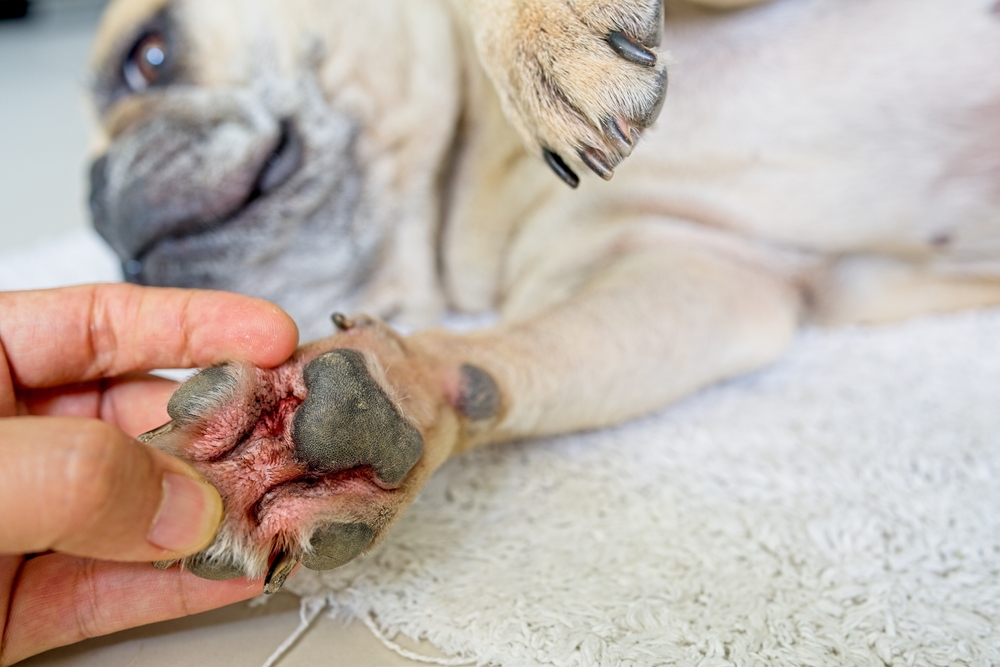
- Between the toes: pododermatitis is inflammation of the paw skin that flares whenever an itchy dog keeps working at their feet, and when it digs deeper it becomes interdigital furunculosis, painful nodules in the webbing.
- Angry, weepy patches: hot spots erupt fast when licking triggers a secondary skin infection, sometimes appearing overnight.
- The ears: chronic otitis externa is one of the most common allergic complications we see, and recurring ear trouble is often a skin allergy talking.
Chronic Skin Reactions in Cats
Cats show their allergies through the coat, and because they are private about grooming, families usually notice the result long before the behavior. Three patterns dominate, each with a telltale look:
- Symmetrical hair loss: overgrooming thins the coat along the belly and inner legs, wherever a tongue can reach.
- Tiny crusty bumps: miliary dermatitis is the scattering of small scabs you feel before you see.
- Raised, ulcerated lesions: eosinophilic granuloma complex shows up on the lips, belly, or inner thighs.
When the Skin Just Touches Something It Doesn’t Like
Some reactions develop right where the skin met an irritant. Contact hypersensitivity shows up after the skin touches things like laundry detergents, fabric softeners, new rugs, floor cleaners, or grooming products. Because the reaction happens right where the exposure occurred, it tends to land on areas of thin or hairless skin, the belly, the chin, the underside of the paws, which is a helpful clue when we are tracking down the source.
How Do You Test a Dog or Cat for an Allergy?
Allergies can be difficult to pin down, since the symptoms overlap heavily and many pets are allergic to more than one thing. A pet having an allergic flare will also be more sensitive, so may react strongly to a single flea bite when they normally wouldn’t.
Allergy Testing for Atopic Dermatitis
To get at the root of environmental allergies, testing identifies the specific triggers your pet reacts to, either through an intradermal skin panel or a serum blood sample. One caution: the unreliable consumer allergy tests sold directly to families using hair or saliva samples do not hold up and are best skipped.
Diet Trials for Food Allergies
The gold standard to diagnose a food allergy is an elimination diet trial: 8 to 12 weeks on nothing but a novel or hydrolyzed protein prescription diet, followed by a reintroduction challenge that confirms the diagnosis. It asks for real commitment, because a single cheat can invalidate weeks of work.
Strict compliance is the whole game, so no treats, no table scraps, no flavored medications, all under veterinary supervision. One common shortcut does not work: over-the-counter limited-ingredient foods are not appropriate for a diagnostic trial, because manufacturing cross-contamination means trace proteins routinely sneak in. When you are ready to do it right, schedule a food trial consultation and we will set your pet up with the correct diet and a plan to stick to it.
Parasite Prevention for Flea Allergies
Flea allergies are easier to diagnose, since the itching pattern is often more localized to the rear end and lower back. Putting your pet on a prescription-strength parasite preventative is the best way to diagnose, treat, and prevent a flea allergy. Once your pet has fleas, you probably have fleas in your home; it takes a minimum of three months of steady flea preventative usage to kick flea infestations in your home, so patience is key. Even if your pet is on flea preventatives, a single bite from a flea that jumps on during a walk can be all it takes to set them off again. Our team will recommend the right preventatives for your pet.
From Crisis Response to Chronic Care: How We Treat Reactions
Treatment splits along the same line as everything else: fast, aggressive intervention for the emergency, and a patient, layered plan for the chronic itch.
Treating Acute and Emergency Reactions
For anaphylaxis, the sequence moves quickly: epinephrine to reverse the reaction, IV access for fluids, oxygen support, then antihistamines and corticosteroids to settle the immune system, all wrapped in continuous monitoring. That last part matters more than it looks, because anaphylaxis can come in a biphasic pattern, a second wave that hits hours after your pet seems fine, which is why we keep patients under watch well past their apparent recovery. Any respiratory distress, from open-mouth breathing to blue gums to a sudden shift in rhythm, belongs in the emergency tier rather than the wait-and-see one, and it needs care immediately. For the rare pet with a confirmed history of severe anaphylaxis, a take-home epinephrine auto-injector is something we weigh case by case.
Treating Chronic Skin and Ear Disease
Chronic allergy is a multi-layer job. First we look for the secondary infections riding along on the allergy, using ear and skin cytology to see exactly which bacteria or yeast are involved before choosing a treatment. Then comes the part that actually breaks the cycle: addressing the underlying allergy rather than only mopping up the trouble it keeps causing. Sound allergy management almost always combines several tools instead of leaning on one medication, and we map out the right mix for your pet based on the diagnosis and a conversation with you.
How Do You Keep Allergy Flares from Coming Back?
Prevention is where allergic pets get their lives back. No single move solves it, but stacked together, parasite control, the right medication, testing, grooming, and nutrition keep flares small and infrequent instead of constant. It takes a plan built for your pet, not one product, and it holds up best when you stay consistent with every piece of it.
Parasite Prevention Comes First
For any itchy pet, year-round parasite prevention is non-negotiable, since fleas amplify every other allergy and one bite can set off weeks of scratching in a sensitized animal. Even a pet whose main problem is pollen or food will spiral if fleas join the party.
Prescription Allergy Medications
When itch needs real firepower, several prescription options work in different ways:
- Fast-acting itch relief: JAK inhibitors like Apoquel, Zenrelia, and Numelvi quiet the itch signal within hours.
- Monthly injection: Cytopoint targets established atopic dermatitis in dogs with an antibody given as a shot.
- Immune-system modulators: Atopica modulates the immune response for dogs and cats whose allergies do not settle with other tools.
- Topical therapies: shampoos, conditioners, sprays, wipes, and mousses with medicated ingredients heal the skin, reduce itching, and decrease secondary infection risks.
- Steroids: corticosteroids knock down symptoms quickly, best used in bursts rather than long stretches due to the high risk of side effects.
- Antihistamines: antihistamines help some individuals, though they do not work for everyone.
- Immunotherapy: immunotherapy uses customized sublingual drops or desensitization shots to retrain the immune system over 12 to 18 months, addressing the cause rather than the symptom.
- Diets: prescription diets for food allergies or for skin support decrease food allergen exposure and provide skin-supporting ingredients.
Grooming and Fatty Acid Support
Simple maintenance does a surprising amount of work. Regular grooming physically strips allergens off the coat before they can do damage. Wipe-downs after outdoor time, focused on the feet and hairless areas, catch what grooming misses. Layer in omega fatty acid supplements, which support the skin barrier and dial down inflammation over the long haul.
Answers to the Questions Families Ask Most
Can I just give my dog Benadryl for an allergic reaction?
Antihistamines like diphenhydramine help some pets with mild itch, but they will not stop anaphylaxis and are no substitute for an exam during an active reaction. Dosing depends on your pet’s weight and health, and some human products are unsafe for pets.
So when in doubt, check with us first. If your pet has facial swelling, hives, vomiting, or any trouble breathing, call us or head to the nearest ER rather than reaching for the medicine cabinet.
Will my pet outgrow their allergies?
Most pets do not outgrow their allergies. Environmental and food allergies tend to be lifelong conditions that are managed rather than cured, and many pets actually develop new sensitivities as they age. The good news is that well-controlled allergies rarely dominate a pet’s life. With the right combination of parasite prevention, medication, and sometimes immunotherapy, most pets go from constant misery to occasional, manageable flares. The goal is control, not a one-time fix.
How fast does anaphylaxis happen?
Anaphylaxis happens fast, which is exactly what makes it dangerous. Signs can appear within minutes of a sting, vaccine, or trigger, and they can worsen just as quickly. In dogs, watch for sudden vomiting, weakness, or collapse; in cats, watch for open-mouth breathing. There is no safe window to wait it out. If you see these signs, treat it as the emergency it is and get your pet in immediately, calling ahead if you can so the team is ready.
Treating the Cause, Not Just the Next Flare
Effective allergy care is not about winning one flare at a time. It is about finding what drives the itch and treating that, so your pet steps off the treadmill of recurring infections and endless scratching. Pets whose allergies are genuinely managed are more comfortable, healthier, and happier to live with.
If your dog or cat is caught in that cycle, book a visit and we will build a plan that actually holds. You can also get in touch with us to start that conversation.



Leave A Comment