

Certain breeds are so commonly associated with eyelid abnormalities that you might assume the squinting and tearing is just part of the package, something the dog was born with and will live with. But entropion (where the eyelid rolls inward, rubbing the eyelashes against the eye) and ectropion (where the eyelid droops outward, exposing the inner tissue) are conditions that cause real discomfort and can lead to corneal damage if left untreated. Surgery to correct these issues is safe, highly effective, and usually curative rather than just palliative.
LaGrange Veterinary Hospital in Lagrangeville takes a thorough, head-to-tail approach to every patient, and eyelid abnormalities are part of what we evaluate as part of a comprehensive physical exam. Our services include expert soft tissue surgery for eyelid correction. If your dog is tearing excessively or has been squinting since puppyhood, request an appointment for an evaluation.
What Entropion and Ectropion Are
Entropion in dogs is the inward rolling of the eyelid margin, which causes the eyelashes and skin to rub against the cornea (the clear front surface of the eye). The constant friction is painful, and over time it can produce corneal scratches, ulcers, scarring, and pigmentation that affects vision.
Ectropion is the opposite: the eyelid (typically the lower lid) sags outward, exposing the pink inner conjunctival tissue. The exposed surface is vulnerable to environmental irritation, debris accumulation, and infection.
Both conditions are common, both are treatable, and both can be present in the same dog at the same time. The eyelid position is just one piece of the picture; corneal health, tear production, and lash anatomy all factor into the evaluation and treatment plan.
Which Breeds and Factors Increase Eyelid Problem Risk?
Genetics and facial structure drive most eyelid abnormalities. Knowing your breed’s risk profile helps with early recognition.
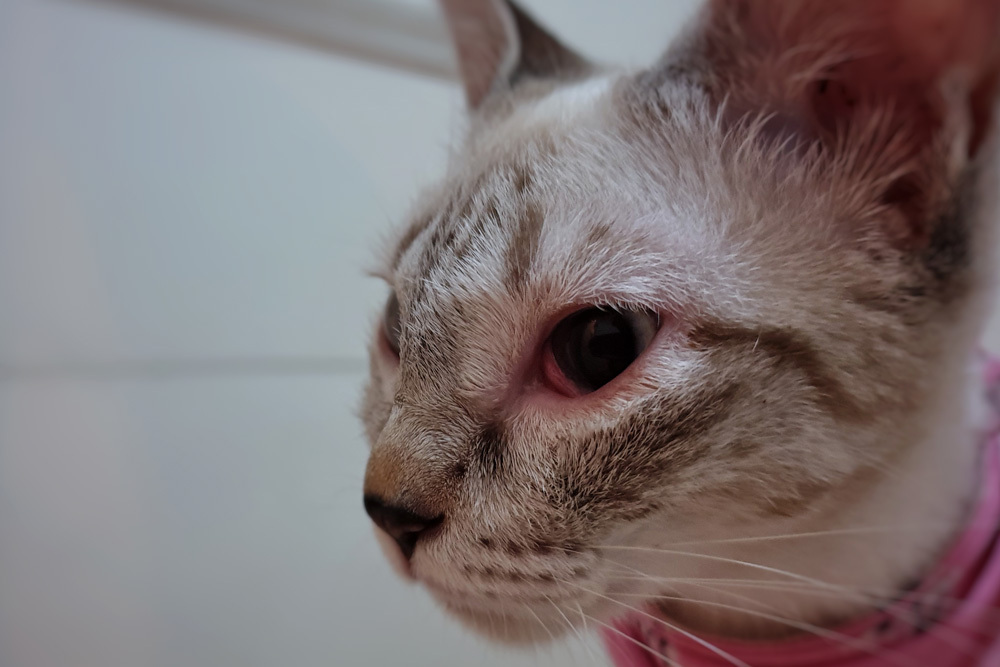
Entropion is most common in dogs with loose facial skin or heavy folds (Shar-Peis, Bullmastiffs, Saint Bernards, Bloodhounds, Chow Chows), deep-set eyes (Labradors, Rottweilers, Great Danes, Golden Retrievers), flat or shortened faces (Bulldogs, Pugs, Boxers, Boston Terriers), or smaller breeds with prominent eye conformation (Shih Tzus, Pekingese). Cats can develop entropion too, particularly flat-faced breeds like Persians and senior cats with chronic ocular surface disease.
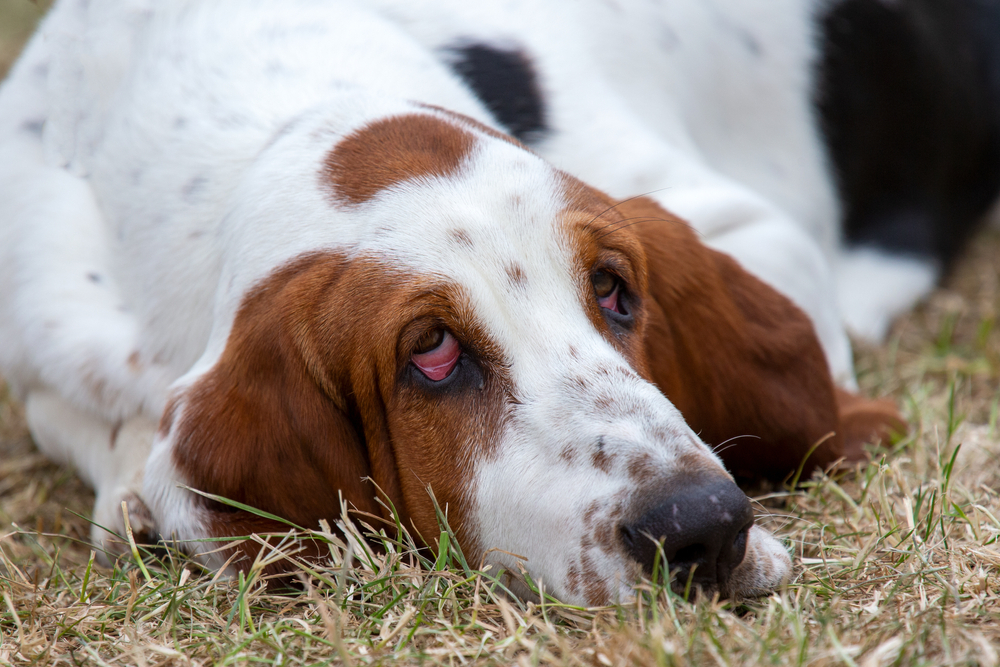
Ectropion shows up most often in breeds with naturally loose lower lids: Bloodhounds, Saint Bernards, Mastiffs, Newfoundlands, Cocker and other Spaniels, Basset Hounds, and some Great Danes. A few breeds, particularly Bulldogs, Saint Bernards, and Mastiffs, can develop both entropion and ectropion in the same eye, producing a characteristic “diamond eye” shape.
Beyond breed, age-related tissue changes in seniors, chronic inflammation from allergies or eye infections, pain-induced squinting that creates the appearance of entropion (sometimes called “spastic” entropion), previous trauma or scarring, and significant weight loss in pets who were previously obese can all contribute to eyelid abnormalities.
What Symptoms and Complications Come From Untreated Eyelid Conditions?
The most common signs are squinting (often worse in bright light), excessive tearing or wet streaks down the face, rubbing or pawing at the eye, redness around the eye, abnormal discharge, cloudy spots on the cornea, and behavioral changes like hiding or irritability. These signs of eye pain shouldn’t be dismissed as cosmetic. Eye pain is real pain, and persistent friction or exposure has consequences.
What Happens If Entropion Is Left Untreated?
When the eyelid stays rolled inward, the lashes and skin maintain constant contact with the cornea every time your dog blinks (which is thousands of times per day). The cornea, despite being remarkably resilient, was not designed to absorb that kind of repetitive friction. Each abrasion compounds the next, and damage accumulates faster than the eye can heal itself.
Chronic abrasion progresses to corneal ulcers, which are open wounds on the eye surface that are intensely painful and require aggressive treatment. With repeated injury, the cornea develops scarring (which is opaque rather than clear) and pigmentation deposits that gradually darken the surface and reduce vision. Severe cases risk corneal perforation, where deep ulcers eat through the cornea entirely and the eye structurally fails. Chronic infections become a constant threat once the protective barrier is compromised. The vision changes from scarring and pigmentation are usually permanent, even after surgical correction, which is why we treat entropion as a “do not delay” diagnosis once it is confirmed.
What Happens If Ectropion Is Left Untreated?
Ectropion creates a different problem: the inner surface of the eyelid (the conjunctiva) is exposed to the outside world rather than being protected behind the eyelid where it belongs. Pollen, dust, debris, wind, and bacteria all reach tissue that is not built to handle them, and the tear film cannot distribute properly across the eye when the lid sags away from the surface.
The result is chronic conjunctivitis, recurrent eye infections that often return as soon as antibiotics stop, persistent eye discharge and tear staining, and dry eye (keratoconjunctivitis sicca) from compromised tear distribution, which can become permanent and require lifelong drops. In severe cases, the cornea itself becomes damaged from chronic exposure. The longer either condition goes unaddressed, the more complicated treatment becomes, and the more likely it is that supplementary treatments will be needed alongside surgical correction.
How Veterinarians Diagnose Eyelid Abnormalities
A complete eye examination evaluates eyelid position and movement under normal lighting, the corneal surface (often with fluorescein stain to identify ulcers), tear production through a Schirmer tear test, and lash anatomy looking for misdirected lashes (distichiasis or ectopic cilia) that can mimic or compound entropion. Topical anesthetic application is part of the workup too, since it distinguishes pain-induced squinting from true structural eyelid abnormality. If the squinting resolves once the anesthetic takes effect, the cause is likely a corneal ulcer or other surface issue rather than the eyelid itself, and treating the underlying pain sometimes resolves the apparent entropion entirely.
Treatment Options
Temporary or Short-Term Measures
Not every case requires immediate definitive surgery. Temporary eyelid tacking uses small sutures to hold the eyelid in a more normal position, providing immediate corneal protection while permanent decisions wait. Tacking is most useful for growing puppies whose facial conformation is still developing (definitive surgery in young puppies risks overcorrection as they grow), pets with pain-induced squinting where treating the underlying cause may resolve the apparent eyelid abnormality, and pets needing immediate corneal protection before scheduled surgery. Tacking sutures typically stay in place for several weeks and can be repeated, with permanent correction considered once the dog has finished growing or contributing factors have been managed.
Permanent Surgical Repair
Definitive eyelid surgery offers a lasting fix once your pet is mature and conditions are clearly structural. Specific techniques vary based on the severity of the eyelid malposition, which lid is affected, concurrent issues like distichiasis or chronic corneal disease, and individual anatomy. The general principle is conservative correction: removing or rotating just enough tissue to restore normal eyelid position without overcorrecting. Overcorrection can cause the opposite problem (creating ectropion when correcting entropion, for example), which is why an experienced surgical approach matters. Customized anesthesia protocols, continuous monitoring, and thoughtful pain management are standard, and most eyelid surgeries are outpatient procedures with same-day discharge.
Entropion in Cats
Entropion in cats presents differently than in dogs. Feline entropion frequently develops later in life rather than being congenital, and it often occurs alongside chronic ocular surface disease, herpesvirus infection, or significant weight loss. Cats sometimes need a combination of surgical techniques tailored to their specific situation, and underlying chronic eye disease may need to be managed alongside surgical correction.
What Should You Expect on Eyelid Surgery Day?
The typical sequence:
- Pre-anesthetic evaluation including bloodwork to assess organ function and anesthesia safety
- Pre-anesthetic medication for sedation and pain control
- Anesthesia induction and intubation with continuous monitoring of heart rate, breathing, blood pressure, oxygen, and temperature
- Surgical preparation with sterile draping of the affected area
- Surgical correction using techniques matched to the specific eyelid issue
- Multimodal pain management including local anesthetic, systemic medications, and post-op pain control
- Recovery monitoring as your pet wakes up from anesthesia
- Discharge home the same day with detailed instructions
Most pets are bright and alert by the time they go home, though the eye area will be swollen for the first several days.
Recovery and Home Care After Eyelid Surgery
Mild to moderate eyelid swelling for 3 to 7 days, some bruising around the eye, slight clear or lightly tinged discharge, and visible sutures are all part of normal healing. Call us, however, if you notice any of these warning signs:
- Increasing redness or significant swelling
- Heavy or yellow-green discharge
- Cloudiness developing on the cornea
- Severe pain that doesn’t respond to medication
- Reopening of the surgical site
- Rubbing or scratching at the eye despite the collar
The Elizabethan collar is non-negotiable. Pets who rub or scratch at the surgical site can damage the repair within seconds. Keep the collar on continuously for the full duration recommended (usually 10 to 14 days), even at night and during meals.
Giving your pet eye medications is easier when you approach from the side rather than straight ahead, gently retract the lower lid, and apply drops or ointment to the inner corner of the eye. Reward your pet immediately afterward. Calm, brief handling is more effective than prolonged restraint. If anything seems off during recovery, reach out to us right away rather than waiting.
The healing timeline runs roughly:
- Day 0 to 3: Most swelling and bruising
- Day 3 to 7: Swelling decreases substantially
- Day 10 to 14: Suture removal at recheck appointment
- 2 to 4 weeks: Final eyelid position becomes apparent as residual swelling resolves
- 6 to 8 weeks: Full healing complete
Recheck appointments confirm proper healing and final eyelid position. In a small percentage of cases, minor revisions may be recommended after final position settles, particularly in severe initial cases or in growing dogs.
What Are the Surgical Outcomes and Prognosis for Eyelid Correction?
Most pets experience dramatic, immediate improvement in comfort once eyelid surgery has healed. The chronic squinting, tearing, and rubbing typically resolve, and the eyes can finally function normally. Outcome depends on the severity of the eyelid abnormality at surgery, pre-existing corneal damage including scarring or pigmentation, overall eye health and tear production, age and facial structure maturity, and quality of home care during recovery.
Realistic expectations matter. Pre-existing corneal scarring may not fully resolve, though pain relief and protection from further damage are achieved. Chronic dry eye that developed secondary to long-standing ectropion may require ongoing management even after surgical correction.
For those showing dogs: some breed registries have rules about surgical correction of inherited conformation issues. Worth checking before scheduling if competition is part of your dog’s life.
Frequently Asked Questions
Is eyelid surgery painful for my pet?
Modern surgical and pain management techniques keep discomfort minimal. Most pets are alert and reasonably comfortable on the same day, with full recovery over a couple of weeks.
Will the condition come back after surgery?
In most cases, no. Definitive surgical correction in mature pets typically provides a permanent solution. Recurrence is more common in growing puppies, which is why we wait when possible until growth is complete.
Can entropion or ectropion affect both eyes?
Yes, frequently. Bilateral surgery on the same day is the usual approach when both eyes are affected. Recovery is similar to single-eye surgery.
My puppy was diagnosed with entropion. Should we do surgery now or wait?
Usually wait if possible. Definitive surgery in young puppies risks overcorrection as their face continues to grow. Temporary tacking provides corneal protection in the meantime, with definitive surgery scheduled after growth is complete (often around 9 to 12 months, depending on breed).
How much does eyelid surgery cost?
Costs vary based on severity, whether one or both eyes are affected, and what concurrent issues need to be addressed. We provide individual estimates after examination.
Seeking Help for Pet Eyelid Conditions
Entropion and ectropion are highly manageable conditions, and timely surgical correction restores comfort and protects vision. Squinting, tearing, and rubbing aren’t quirks of certain breeds; they’re signs of treatable problems that don’t have to continue.
If you’ve noticed any of these signs in your pet, our team is happy to evaluate them. Give us a call to schedule a thorough exam, and we’ll walk through the findings and treatment options together.

Leave A Comment